
Concrete vs. Pavers
Trying to choose between concrete vs pavers for your patio, driveway, walkway, entry, or outdoor living area?
Both can be good choices. The right one depends on how you want the space to look, how you plan to use it, how much maintenance you want, and what your property needs.
Concrete is poured as one surface. Pavers are individual units installed over a prepared base.
This guide explains the main poured concrete or paver surface comparison points so you can choose with more confidence before requesting an estimate.
Odell Concrete has served Orange County since 1976. We help homeowners, HOAs, property managers, builders, and business owners plan concrete patios, driveways, walkways, pavers, drainage, grading, demolition, and decorative concrete finishes.
Established in 1976
Licensed & Insured
California Contractor License #1065525
Serving Orange County and nearby Southern California communities
What This Concrete vs. Pavers Guide Covers
This guide helps you compare concrete vs pavers before choosing a surface.
It covers:
- How poured concrete and pavers are different
- Which option may fit patios, driveways, walkways, and entries
- Cost factors to compare
- Repair and replacement differences
- Drainage and grading concerns
- Maintenance expectations
- Design and finish options
- What to send before requesting an estimate
For concrete service options, visit our concrete work page.
For paver service details, visit our pavers page.
For more planning help, visit the Odell Concrete resource center.
Quick Answer: Is Concrete or Pavers Better?
There is no single best choice for every property.
Concrete may be a better fit if you want:
- A poured surface
- A clean, simple look
- Fewer joints across the area
- A driveway, patio, walkway, or slab surface
- A surface that connects well with other concrete areas
- Finish options like broom, washed, Top-Cast, or stamped concrete
Pavers may be a better fit if you want:
- Individual units
- A segmented hardscape look
- More small-section repair flexibility
- Pattern variety
- A patio, walkway, courtyard, or outdoor seating area with visible joints
- A surface that can be adjusted in sections
The right choice depends on the site.
If the area has poor drainage, old concrete, slope problems, tree roots, tight access, or heavy use, those conditions should be reviewed before choosing either option.
What Is Poured Concrete?
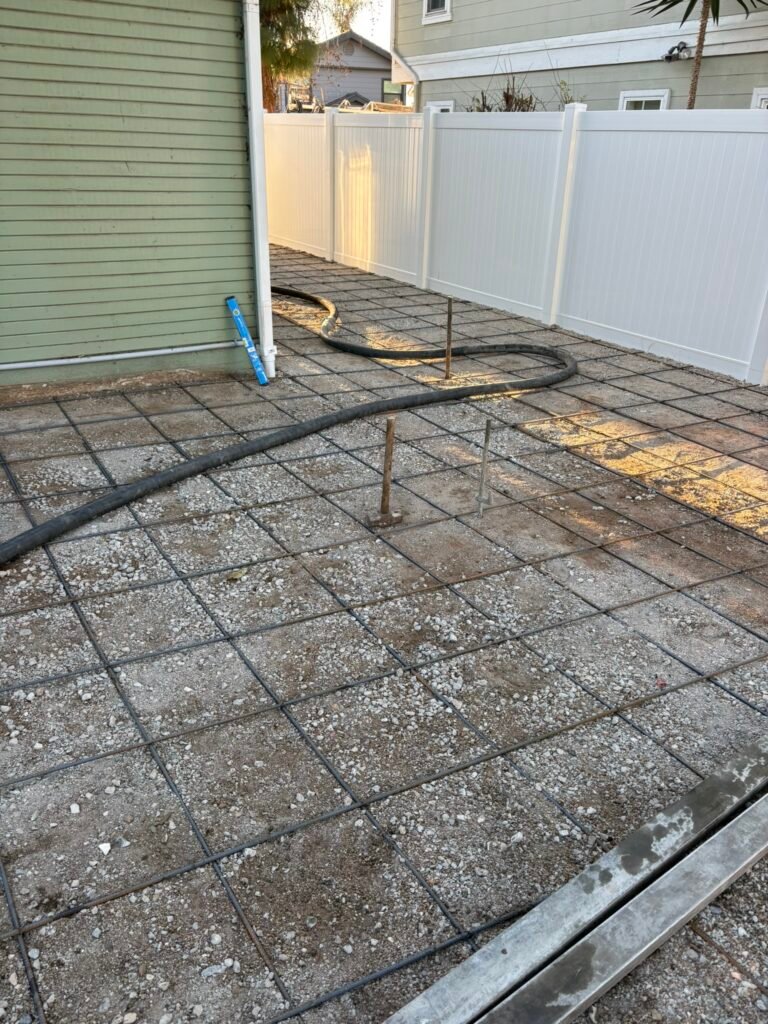
Poured concrete is installed as one continuous surface.
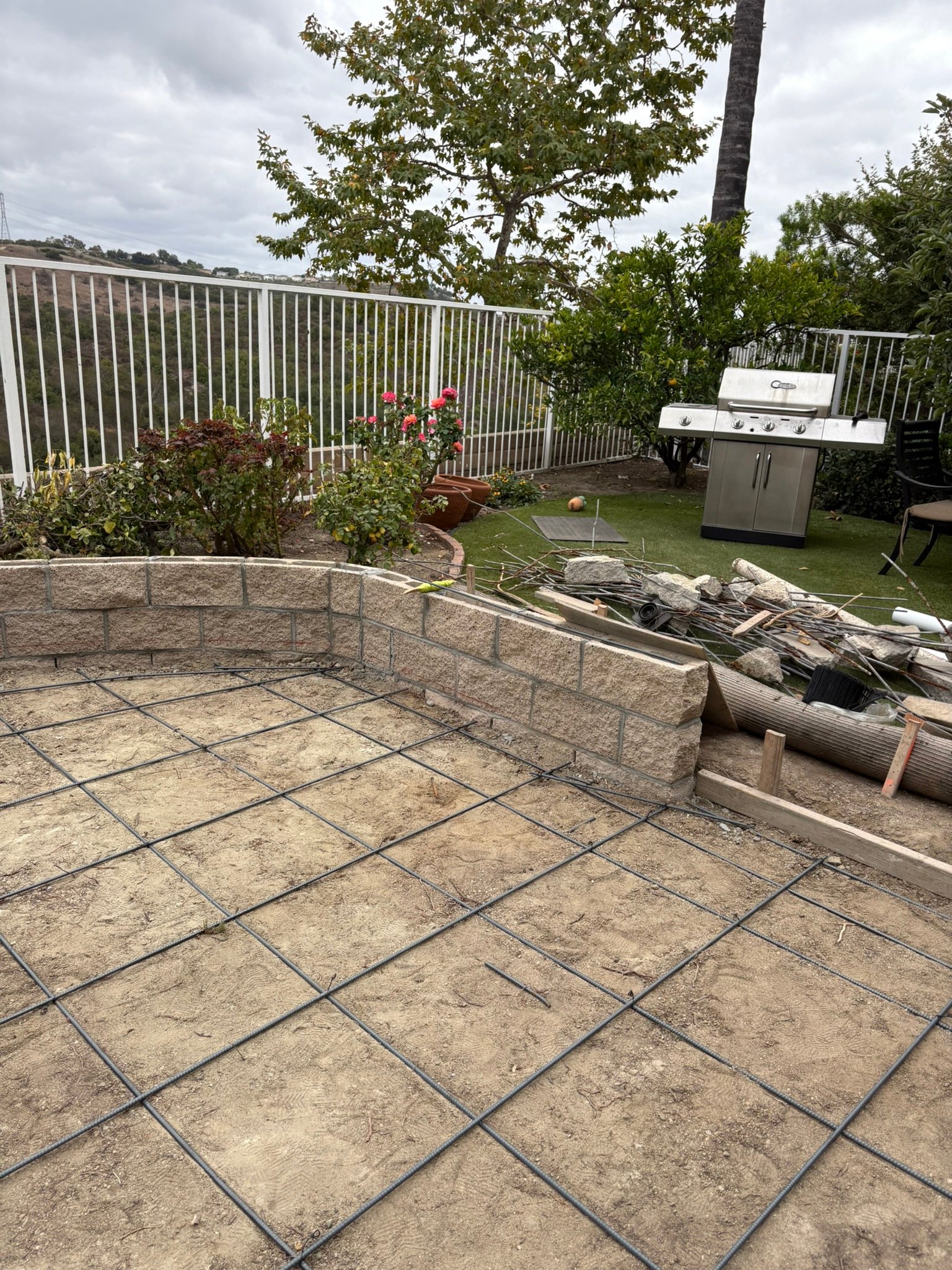
The area is prepared, formed, poured, finished, and cured. Depending on the project, the surface may use a simple finish or a decorative finish.
Poured concrete is often used for:
- Driveways
- Patios
- Walkways
- Side yards
- Entries
- Courtyards
- Slabs
- Garage approaches
- Outdoor living areas
Concrete can be finished in different ways, including:
- Broom finish
- Washed finish
- Top-Cast finish
- Stamped concrete
- Decorative concrete
- Custom texture or border details
For finish options, visit our decorative concrete finishes page.
What Are Pavers?
Pavers are individual pieces installed over a prepared base.
They may be made from concrete, stone, brick, or other hardscape materials. Instead of one poured surface, pavers create a segmented system with joints between each unit.
Pavers are often used for:
- Patios
- Walkways
- Driveways
- Garden paths
- Courtyards
- Outdoor seating areas
- Hardscape borders
- Entry areas
Pavers can provide strong design flexibility. They can also make some small repairs easier because individual units may be removed, reset, or replaced.
For paver service details, visit our pavers page.
Concrete vs. Pavers: Main Differences
Concrete and pavers can both create useful outdoor surfaces. The main difference is how each surface is built.
| Factor | Concrete | Pavers |
|---|---|---|
| Surface Type | One poured surface | Individual units |
| Appearance | Simple or decorative finish | Modular hardscape look |
| Repair Access | Repairs may be more visible | Individual pieces may be replaced |
| Maintenance | Cleaning, crack monitoring, possible sealing | Joint care, re-sanding, resetting |
| Drainage | Needs proper slope and surface flow | Needs proper base, pitch, and edge restraint |
| Design Style | Clean slab, broom finish, washed finish, stamped finish | Defined joints, patterns, and paver layouts |
Both options depend on proper site preparation. A weak base, poor slope, or bad drainage can cause problems with either surface.
Cost Factors to Compare
Cost depends on the full project, not just the surface type.
Concrete cost can depend on:
- Project size
- Concrete thickness
- Finish type
- Old concrete removal
- Grading
- Drainage
- Base preparation
- Site access
- Reinforcement needs
- Layout shape
- Cleanup and hauling
Paver cost can depend on:
- Paver material
- Pattern complexity
- Base preparation
- Edge restraints
- Joint material
- Cutting and fitting
- Drainage needs
- Site access
- Resetting or repair needs
- Cleanup and hauling
A simple concrete patio is different from a custom paver courtyard. A basic walkway is different from a decorative driveway.
For patio pricing factors, read our concrete patio cost guide.
For driveway pricing factors, read our concrete driveway cost guide.
Installation Differences
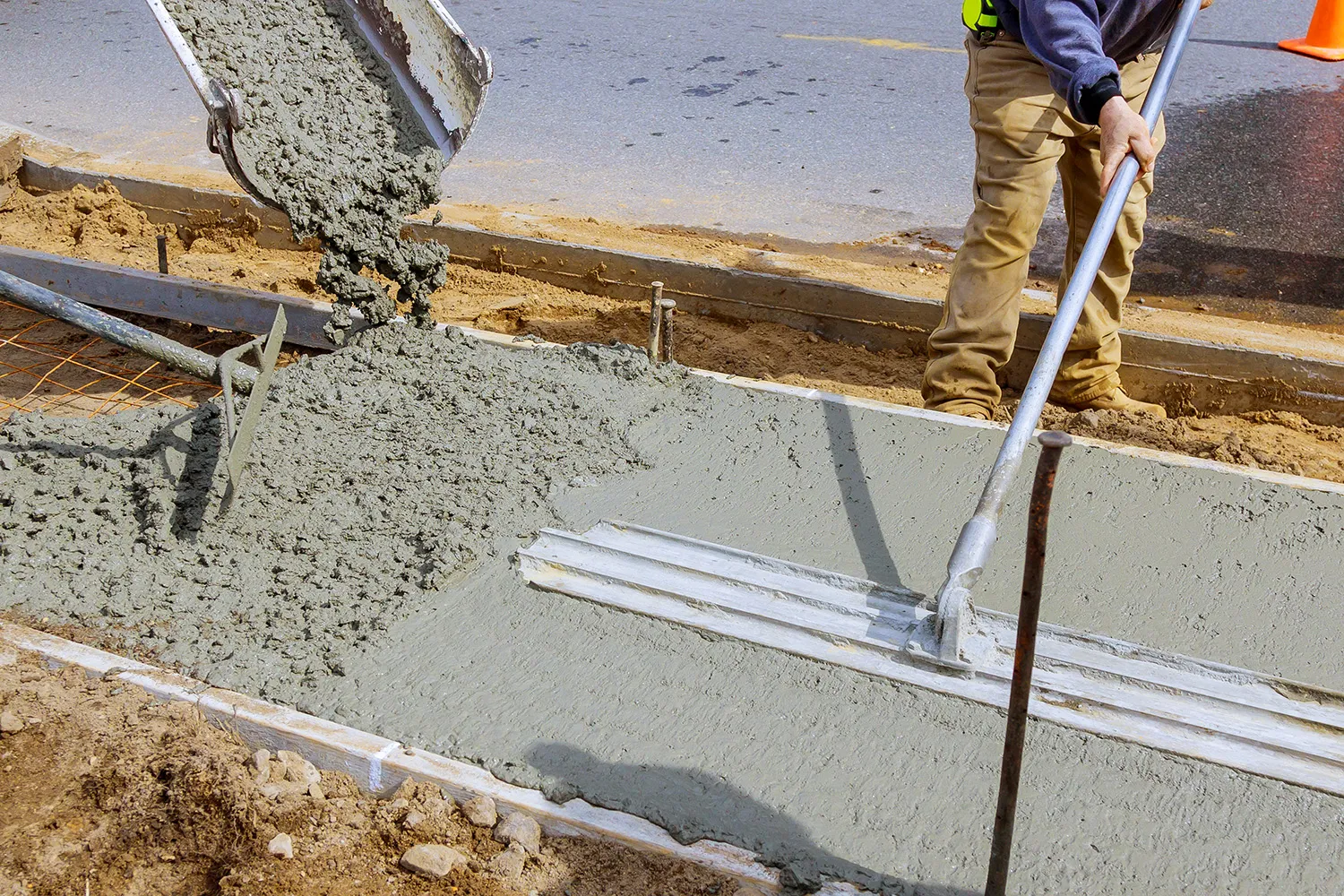
Concrete is poured into forms and finished before it cures.
Pavers are placed piece by piece over a prepared base.
Concrete installation may include:
- Site review
- Layout planning
- Demolition, if needed
- Grading
- Base preparation
- Form setup
- Concrete placement
- Finish work
- Control joint planning
- Curing guidance
- Cleanup
Paver installation may include:
- Site review
- Layout planning
- Base preparation
- Compaction
- Edge restraints
- Paver placement
- Cutting
- Joint filling
- Surface compaction
- Cleanup
Both need solid preparation. If the base is weak, the drainage is poor, or the grading is wrong, the finished surface may not perform well.
For a full process overview, read our how concrete installation works guide.
Appearance and Design Options
Concrete and pavers create different looks.
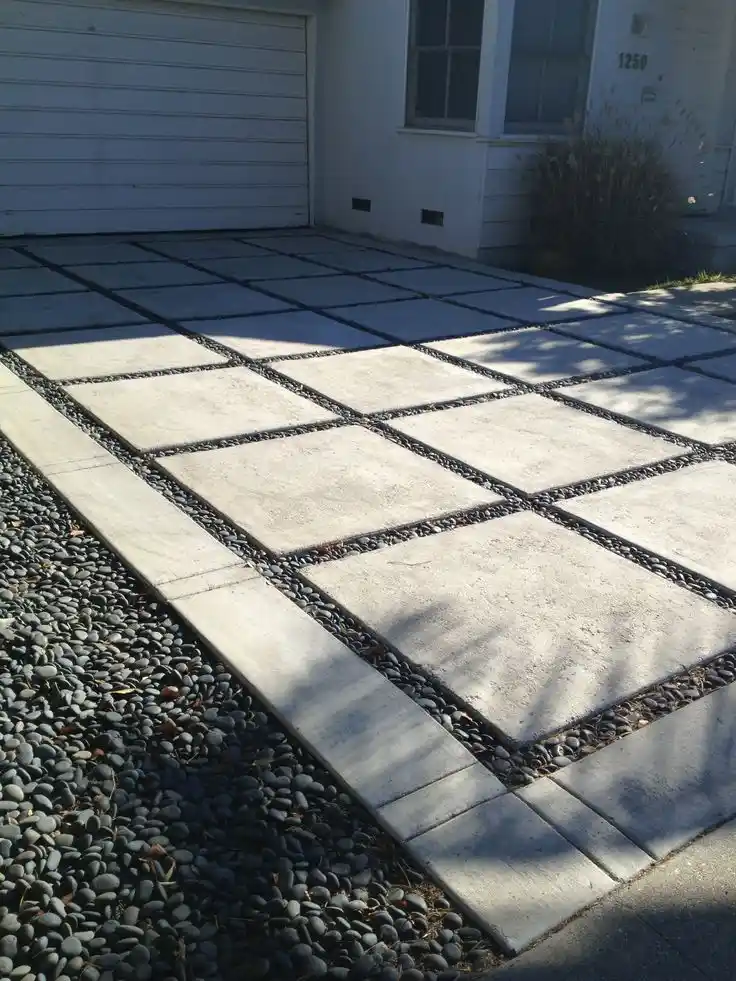
Concrete may be finished with a clean, simple surface or a more decorative finish.
Concrete may be a good fit if you want:
- A smooth poured surface
- A simple broom finish
- A washed or Top-Cast finish
- Stamped concrete
- Fewer joint lines
- A surface that connects with other concrete areas
Pavers may be a good fit if you want:
- A modular hardscape look
- Defined joints
- Pattern variety
- Individual pieces
- Border details
- A patio or walkway with clear visual separation
If you want a decorative concrete look, read our stamped concrete vs. pavers guide.
Repair Access
Repair access is one of the biggest differences between concrete and pavers.
Concrete is one poured surface. If one section cracks, settles, stains, or chips, the repair may be more visible.
Pavers are individual units. If one section settles or one piece cracks, that area may be easier to remove, adjust, or replace.
Concrete repair concerns may include:
- Crack visibility
- Patch appearance
- Color matching
- Texture matching
- Finish differences
Paver repair concerns may include:
- Uneven areas
- Joint sand loss
- Weed growth
- Edge movement
- Matching old and new pavers
If small-section repair access is a major concern, pavers may be worth considering.
If you prefer a continuous poured surface, concrete may be the better fit.
Maintenance Differences
Both concrete and pavers need care.
Concrete maintenance may include:
- Cleaning
- Crack monitoring
- Stain prevention
- Surface sealing, depending on the finish
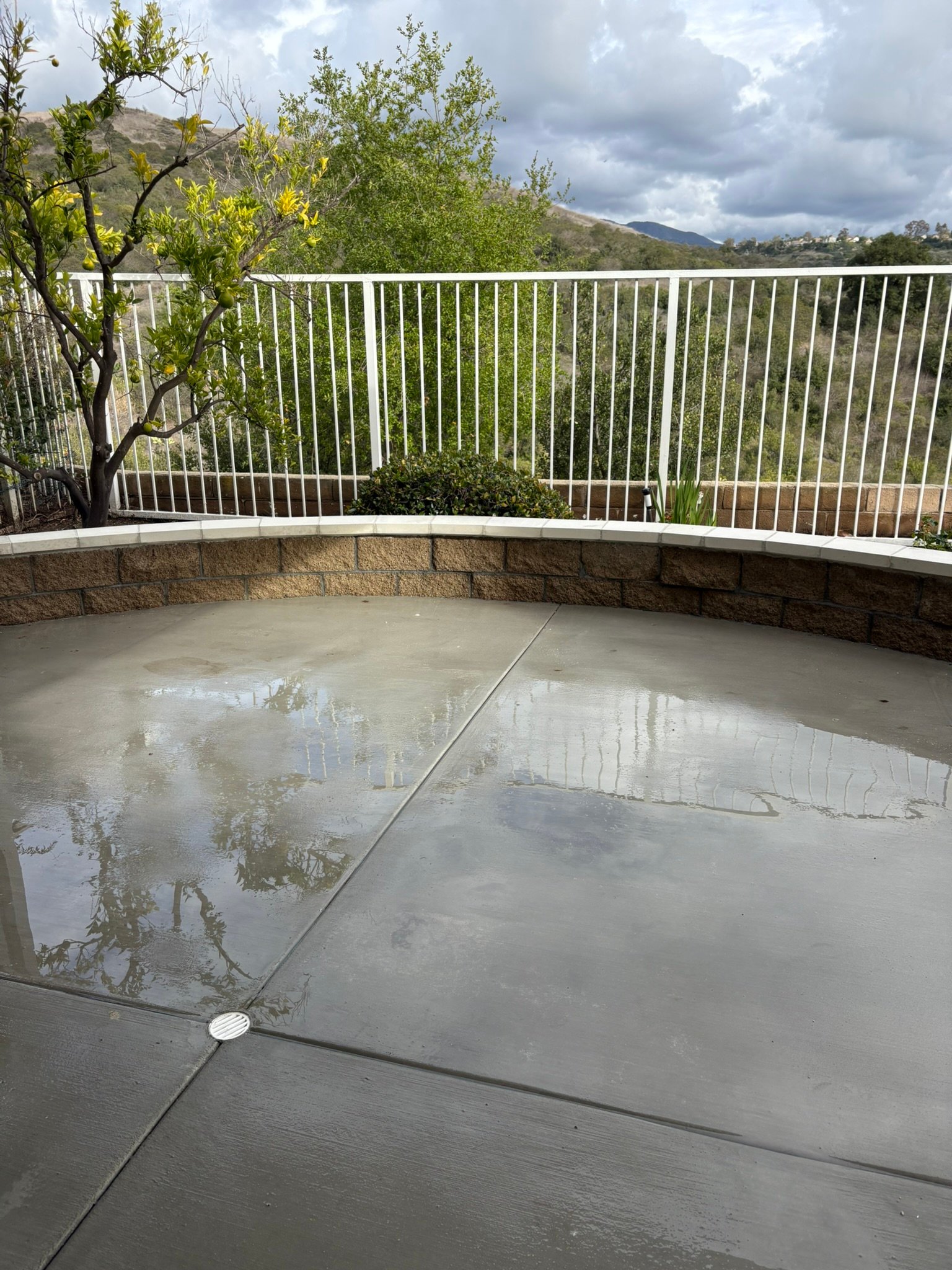
- Watching for standing water
- Avoiding heavy damage before curing is complete
Paver maintenance may include:
- Joint care
- Weed control
- Re-sanding
- Resetting uneven units
- Edge inspection
- Cleaning
- Drainage monitoring
Concrete may appeal to people who want fewer joints.
Pavers may appeal to people who want more small-section repair flexibility.
Shade, water exposure, tree roots, soil movement, and daily use can affect both surfaces.
Drainage and Water Flow
Drainage matters for both concrete and pavers.
Poor drainage can cause:
- Water pooling
- Slippery areas
- Staining
- Settlement
- Base movement
- Cracking
- Soil movement
- Water moving toward the home
Concrete needs the right slope so water flows away from the house, garage, doors, and low areas.
Pavers need a strong base, proper pitch, edge support, and water flow planning.
If water already collects in the area, review the issue before choosing either surface.
Read our guide on why water pools on concrete or visit our concrete drainage systems page for service details.
Stamped Concrete vs. Pavers for Patios
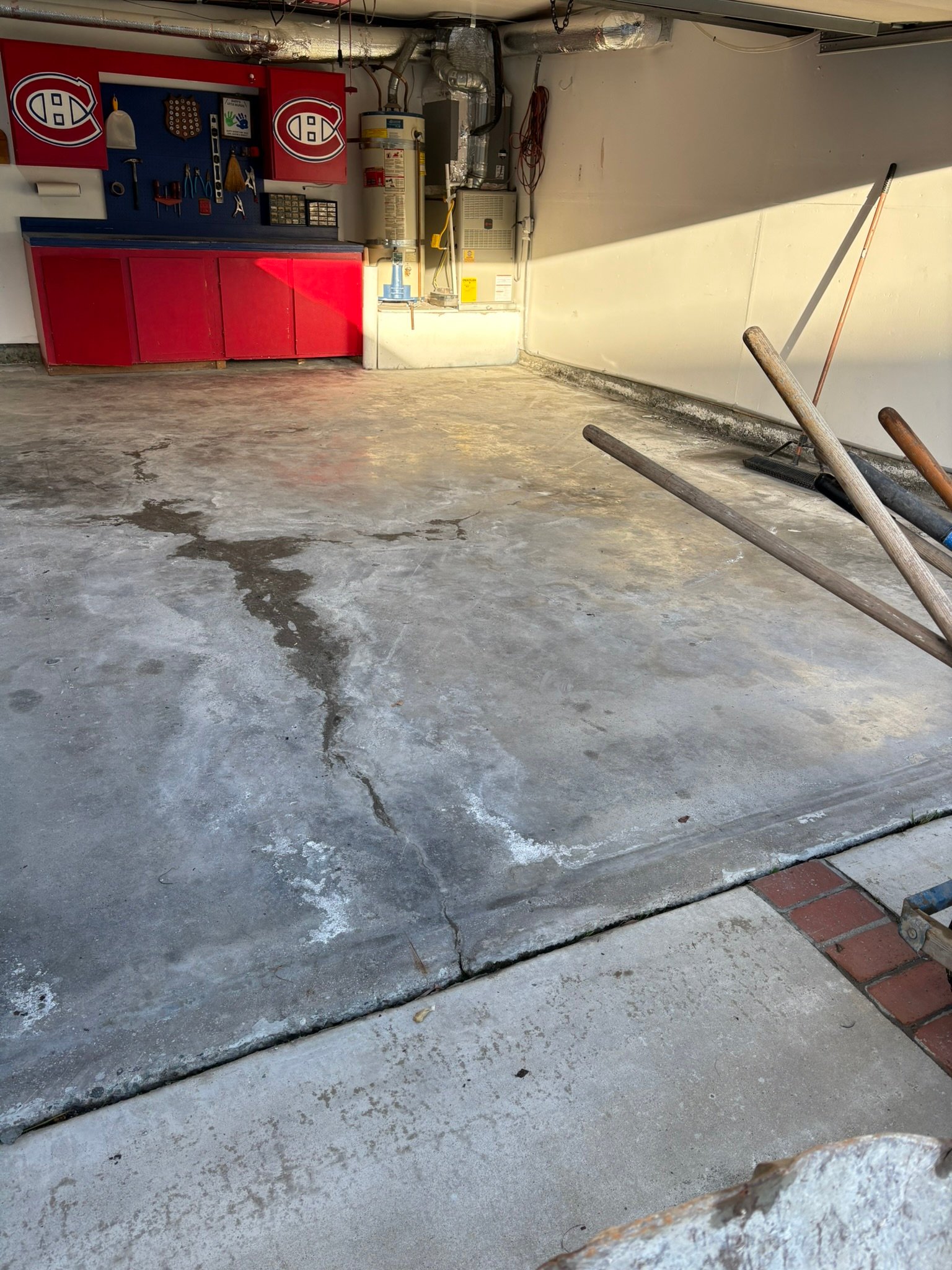
Patios are one of the most common places people compare stamped concrete and pavers.
Stamped concrete may work well for a patio when you want:
- A decorative poured surface
- A stone, slate, brick, or tile look
- Fewer joints across the patio
- A custom color or border
- A surface that connects to other concrete areas
Pavers may work well for a patio when you want:
- A modular hardscape look
- Replaceable units
- Pattern flexibility
- Strong visual separation between outdoor zones
- A surface that can be adjusted in sections
Before choosing, think about:
- Patio size
- Backyard access
- Door transitions
- Drainage direction
- Outdoor furniture
- Shade and sun exposure
- Nearby landscaping
- Whether old concrete needs removal
For patio service details, visit our concrete patio construction page.
Concrete vs. Pavers for Patios
Patios are one of the most common places people compare concrete and pavers.
Concrete may work well for a patio when you want:
- A poured patio surface
- A simple or decorative finish
- Fewer joints
- A surface that connects to walkways, doors, or side yards
- A clean outdoor seating area
Pavers may work well for a patio when you want:
- A modular hardscape look
- Individual repair access
- Pattern flexibility
- Strong visual separation between outdoor zones
- A surface that can be adjusted in sections
Before choosing, think about:
- Patio size
- Backyard access
- Door transitions
- Drainage direction
- Outdoor furniture
- Shade and sun exposure
- Nearby landscaping
- Whether old concrete needs removal
For patio service details, visit our concrete patio construction page.
Stamped Concrete vs. Pavers for Driveways
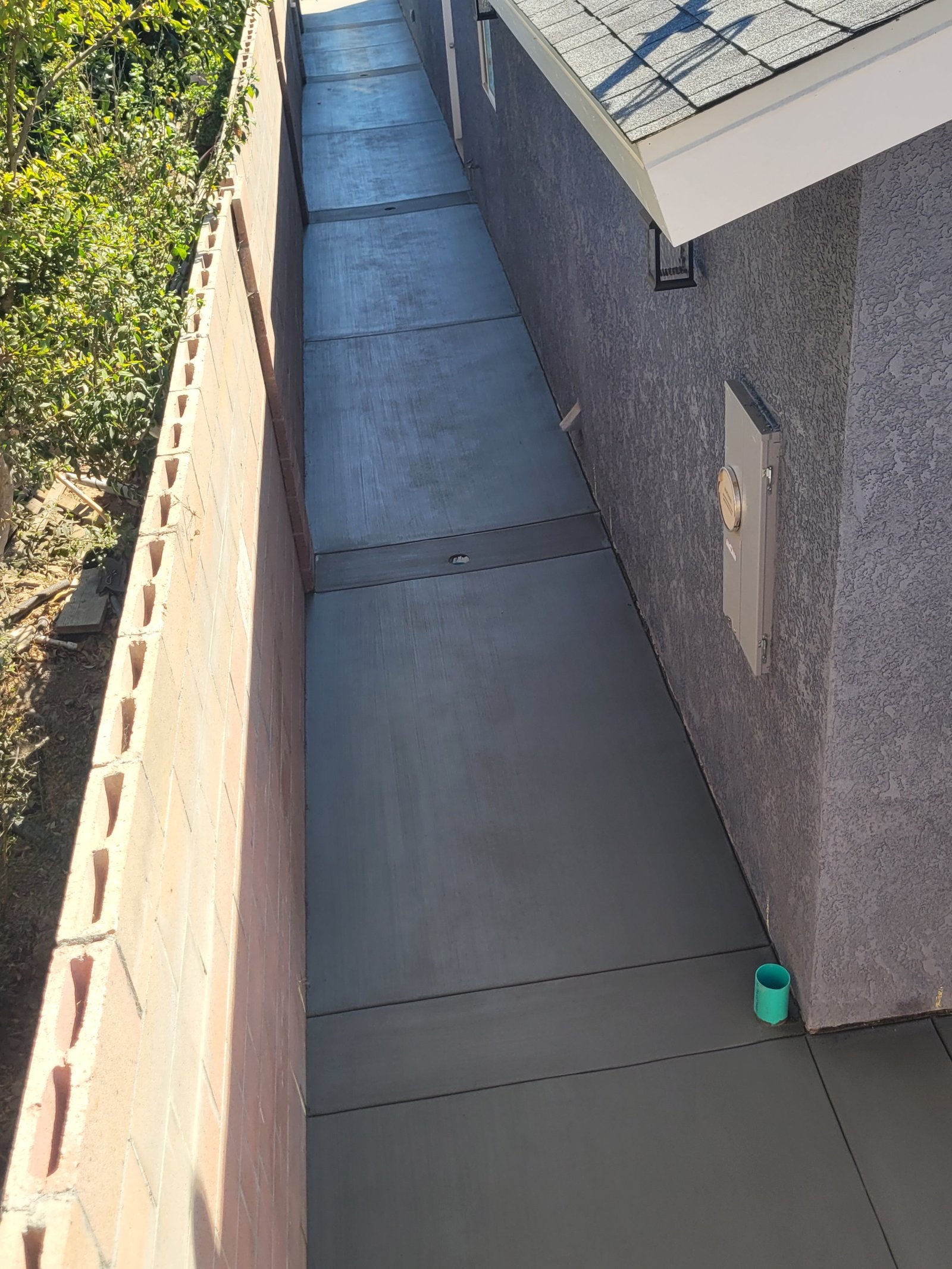
Driveways need more planning than patios or walkways because they support vehicle traffic.
Stamped concrete can be used for some driveways, but the project should account for:
- Vehicle weight
- Concrete thickness
- Reinforcement needs
- Slope
- Drainage
- Garage transition
- Street transition
- Pattern durability
- Maintenance expectations
Pavers can also work for driveways, but they need:
- Proper base depth
- Edge restraint
- Strong compaction
- Correct paver type
- Good drainage
- Attention to settlement
- Joint maintenance
For driveway planning, read our concrete driveway cost guide.
For driveway service details, visit our concrete driveway installation page.
Concrete vs. Pavers for Driveways
Driveways need more planning because they support vehicle traffic.
Concrete can work well for driveways when the project includes the right:
- Thickness
- Base preparation
- Slope
- Drainage
- Finish
- Control joint planning
- Garage and street transitions
Pavers can also work for driveways, but they need:
- Proper base depth
- Correct paver type
- Strong compaction
- Edge restraint
- Good drainage
- Attention to settlement
- Joint maintenance
This driveway patio surface concrete versus pavers decision should be based on daily use, vehicle weight, maintenance expectations, and the condition of the site.
For driveway service details, visit our concrete driveway installation page.
Concrete vs. Pavers for Walkways
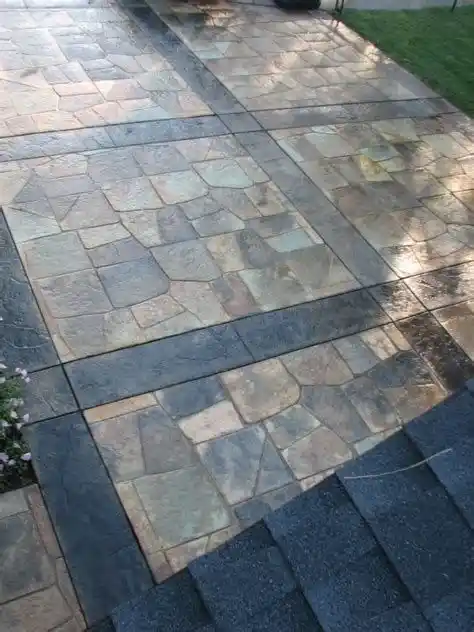
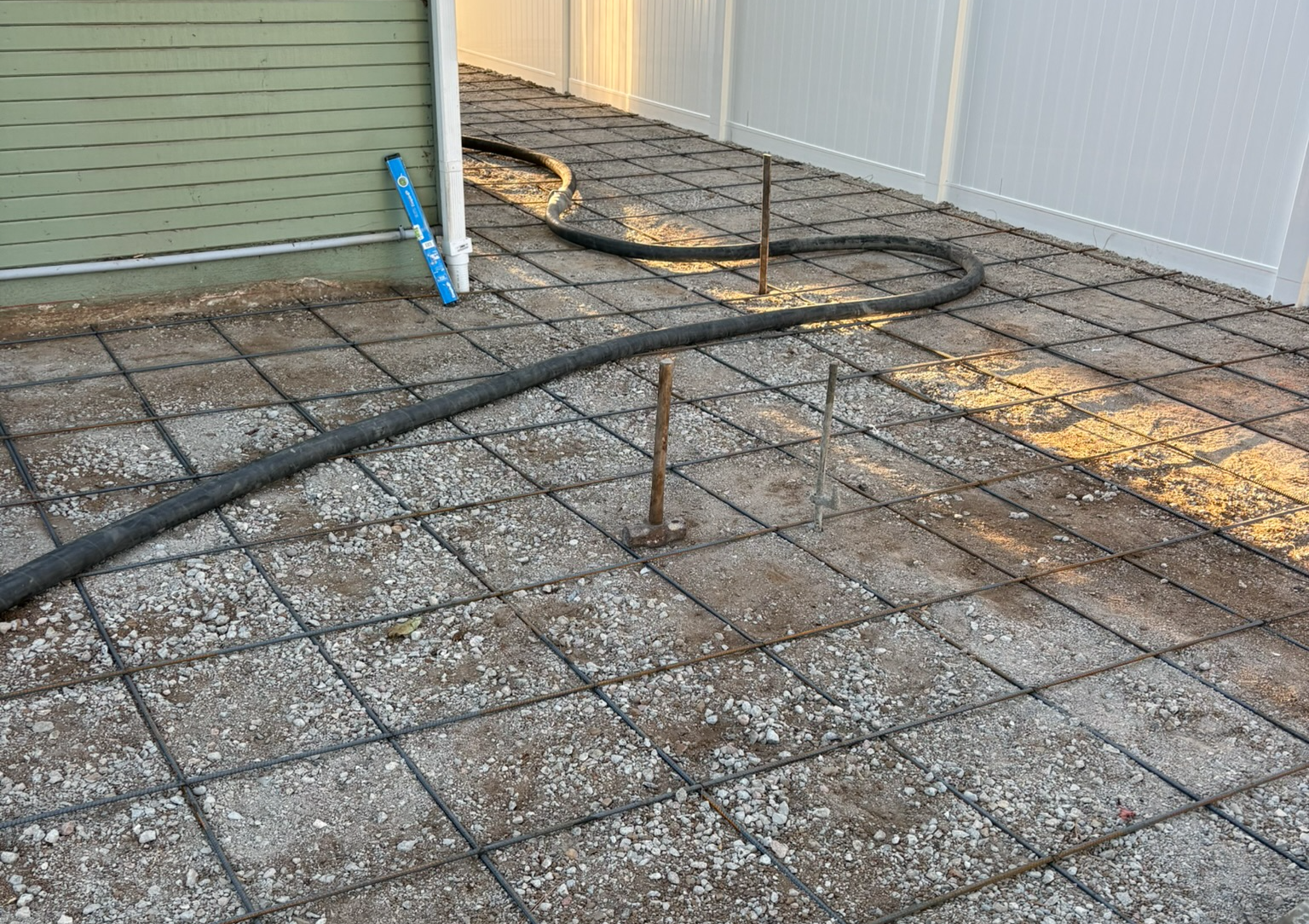
Walkways need safe access, good slope, and comfortable movement.
Concrete may fit a walkway when you want:
- A continuous path
- Fewer joints
- A simple finish
- A textured walking surface
- A surface that connects to a patio or driveway
Pavers may fit a walkway when you want:
- A garden path look
- Individual units
- Pattern flexibility
- Easy section repair
- A hardscape style that connects to a paver patio
Walkway planning should consider:
- Trip hazards
- Drainage
- Slope
- Width
- Surface texture
- Transitions to doors, patios, driveways, and yards
For walkway service details, visit our concrete walkway contractor page.
Which Option Costs More?
There is no fixed answer because every site is different.
Concrete may cost more when the project includes:
- Larger surface area
- Greater thickness
- Decorative finish work
- Old concrete removal
- Drainage correction
- Grading
- Difficult access
- Reinforcement
- Complex layout
Pavers may cost more when the project includes:
- Higher-end paver materials
- Complex patterns
- More cutting
- Larger areas
- Base correction
- Edge restraints
- Drainage work
- Tight access
- Resetting or repairs
The better question is not only, “Which costs less?”
A better question is, “Which surface gives me the right mix of appearance, durability, repair access, maintenance, and long-term fit?”
Which Looks Better?
This depends on your taste and property style.
Stamped concrete can create a custom decorative look with patterns, colors, borders, and textures. It can look clean and finished when installed well.
Pavers can create a classic hardscape look with visible joints, color variation, and modular pattern options.
Stamped concrete may fit better if you want:
- Decorative texture
- A poured surface
- Custom color
- Border detail
- A stone-like or slate-like look
Pavers may fit better if you want:
- Defined units
- Modular patterns
- Traditional hardscape style
- Sectioned outdoor areas
- A surface that looks built piece by piece
If you are also comparing simple concrete finishes, read our broom finish vs. stamped concrete guide.
Which Option Is Easier to Repair?
Both options need maintenance.
Concrete may need cleaning, crack monitoring, and sealing depending on the finish.
Pavers may need joint care, weed control, re-sanding, and resetting if sections become uneven.
Concrete may be easier for people who want fewer joints.
Pavers may be easier for people who want individual repair access.
Your site conditions matter. Tree roots, drainage, soil movement, shade, heavy use, and standing water can affect both surfaces.
Which Looks Better?
This depends on your taste and property style.
Concrete can look clean, simple, and finished. It can also be decorative if you choose stamped concrete, washed finish, Top-Cast finish, or another texture.
Pavers can create a classic hardscape look with visible joints, pattern options, and individual pieces.
Concrete may fit better if you want:
- A poured surface
- Fewer joints
- A clean finish
- A surface that connects to other concrete areas
- Decorative finish options
Pavers may fit better if you want:
- Defined units
- Modular patterns
- Traditional hardscape style
- Sectioned outdoor areas
- A surface that looks built piece by piece
If you are comparing simple and decorative concrete finishes, read our broom finish vs. stamped concrete guide.
Which Is Better Around Water and Drainage?
Neither option fixes drainage by itself.
Concrete can perform well when the slope is correct and water moves away from the home.
Pavers can perform well when the base, pitch, edge restraint, and drainage are planned correctly.
Drainage should be reviewed first if the area has:
- Standing water
- Low spots
- Water near doors
- Water moving toward the house
- Soft soil
- Poor slope
- Downspout discharge
- Previous settlement
- Cracking from water movement
For patio projects, read our drainage before concrete patio guide.
For grading service details, visit our grading page.
Which Is Better for Orange County Outdoor Spaces?
In Orange County, many outdoor surfaces must handle sun exposure, foot traffic, water flow, tight side yards, outdoor furniture, landscaping, and mixed-use spaces.
Concrete can work well for:
- Driveways
- Patios
- Walkways
- Side yards
- Entries
- Courtyards
- Outdoor seating areas
Pavers can work well for:
- Patio zones
- Garden paths
- Courtyards
- Walkways
- Hardscape layouts
- Outdoor spaces where small-section repair matters
Before choosing, think about:
- How the area drains
- How much sun it gets
- How often people use it
- Whether furniture will sit on it
- Whether vehicles will use it
- Whether tree roots are nearby
- Whether old concrete must be removed
- Whether the surface connects to doors, walkways, or driveways
Concrete or Pavers: Best Fit by Project Goal
If You Want a Clean Driveway
Concrete may be a strong fit when you want a poured driveway with a practical finish and fewer joints.
Pavers may be a strong fit when you want a modular driveway with individual units and a hardscape look.
If You Want a Patio for Seating
Concrete may be a strong fit for a simple or decorative patio.
Pavers may be a strong fit if you want visible joints, pattern flexibility, and section repair options.
If You Want Easier Small Repairs
Pavers may be the better fit because individual units can often be replaced or reset.
If You Want Fewer Joints
Concrete may be the better fit because it is poured as one surface with control joints instead of many individual pieces.
If Drainage Is a Concern
Neither option should be chosen until drainage is reviewed.
Poor water flow can affect both concrete and pavers.
Common Mistakes When Comparing Concrete and Pavers
It is easy to compare only the surface. But the surface is only part of the project.
Common mistakes include:
- Choosing based only on appearance
- Ignoring drainage
- Ignoring base preparation
- Forgetting about repair access
- Forgetting about maintenance
- Comparing prices without comparing scope
- Not asking about old concrete removal
- Not checking site access
- Not thinking about furniture, vehicles, or daily use
- Choosing a surface before reviewing the site
A good surface choice should match how the space will actually be used.
When Old Concrete Removal Matters
Old concrete can affect both concrete and paver projects.
Old concrete may need removal if it is:
- Cracked
- Sunken
- Uneven
- Poorly sloped
- Holding water
- Broken at the edges
- Patched many times
- Too thin for the next use
- Built over a weak base
Removal can add demolition, hauling, disposal, grading, base preparation, and cleanup.
For service details, visit our demolition page.
Permits, HOA Rules, and Property Requirements
Some patio, walkway, driveway, and hardscape projects may involve city rules, HOA approval, property management review, or other property requirements.
This may matter when the project affects:
- Drainage direction
- Shared property areas
- Driveway approaches
- Sidewalk connections
- Commercial entries
- Multi-family properties
- Accessible routes
- Exterior exits
- Public access areas
- Retaining walls
- Foundation-adjacent areas
Read our concrete permits in Orange County guide for more planning details.
If the surface connects to an accessible route, visit our ADA concrete ramp requirements guide and ADA concrete work page.
What to Share Before Requesting an Estimate
Use these related guides if you are still comparing options:
- Stamped concrete cost guide
- Concrete vs. pavers
- Broom finish vs. stamped concrete
- Washed finish vs. Top-Cast
- Concrete patio cost guide
- Concrete driveway cost guide
- Why water pools on concrete
- How concrete installation works
- What to ask a concrete contractor
For all guides, visit the Odell Concrete resource center.
When to Request an Estimate
You may need an estimate if you are planning:
- A concrete patio
- A paver patio
- A concrete driveway
- A paver driveway
- A concrete walkway
- A paver walkway
- A new entry surface
- A courtyard surface
- A patio replacement
- Old concrete removal
- Drainage correction
- Grading before a new surface
- A new outdoor living area
Call Odell Concrete at (714) 717-1771 to request a free estimate.
Related Concrete and Paver Resources
Use these related guides if you are still comparing options:
- Stamped concrete vs. pavers
- Stamped concrete cost guide
- Concrete patio cost guide
- Concrete driveway cost guide
- Broom finish vs. stamped concrete
- Washed finish vs. Top-Cast
- Why water pools on concrete
- How concrete installation works
- What to ask a concrete contractor
For all guides, visit the Odell Concrete resource center.
Request a Concrete or Paver Estimate in Orange County
Need help choosing between concrete and pavers?
Call Odell Concrete at (714) 717-1771 to request a free estimate.
You can also visit the contact page and share your photos, approximate size, current surface condition, drainage concerns, access notes, finish preferences, and whether old concrete needs removal.
FAQs About Stamped Concrete vs. Pavers
It depends on your project. Concrete may be better if you want a continuous poured surface with fewer joints. Pavers may be better if you want individual units that can often be replaced or reset in smaller sections.
Pavers are usually easier to repair in small areas because individual units can often be removed and replaced. Concrete repairs can be more visible because the color, texture, and finish may be harder to match.
The cost depends on size, material, site access, base preparation, drainage, grading, old surface removal, finish type, and project complexity. A simple concrete patio may differ from a custom paver patio, so the full scope should be compared.
Both can last a long time when installed on a proper base with good drainage. Long-term performance depends on site preparation, water flow, maintenance, surface use, soil movement, and repair needs.
Concrete may need cleaning, crack monitoring, and sealing depending on the finish. Pavers may need joint care, weed control, re-sanding, and resetting uneven sections.
Pavers do not automatically solve drainage problems. They still need proper base preparation, pitch, edge restraint, and water flow planning. Concrete also needs the right slope so water moves away from the home.
Yes. Concrete can work well for patios when the site has proper base preparation, drainage, slope, finish planning, and a layout that fits the way the space will be used.
Yes. Pavers can work well for patios, especially when you want a modular hardscape look, individual repair access, and flexible pattern options.
Yes. Concrete can work well for driveways when the project includes proper thickness, base preparation, slope, drainage, finish selection, and control joint planning.
Yes. Pavers can be used for driveways, but they need proper base depth, edge restraint, compaction, drainage planning, and the right paver type for vehicle use.
Send photos, approximate size, project type, current surface condition, drainage concerns, access notes, finish ideas, maintenance concerns, and whether old concrete needs removal.
Call Odell Concrete at (714) 717-1771 or visit the contact page to request a free estimate.
Start Comparing Concrete and Pavers
The right choice should match your property, budget, design goals, drainage needs, repair expectations, and maintenance plans.
If you are comparing concrete vs pavers for a patio, driveway, walkway, entry, or outdoor living space, call Odell Concrete at (714) 717-1771 to request a free estimate.