- cretemaster72@gmail.com
- Garden Grove, CA 92649
- Mon-Sun 7 AM–7 PM

Menu
Planning a wheelchair access concrete ramp for a business, apartment community, HOA property, parking area, walkway, storefront, or public-facing entry?
A concrete ramp needs more than a sloped surface. It should be planned around slope, clear width, landings, handrails, edge protection, surface texture, drainage, transitions, permits, and the route it connects to.
This guide explains ADA concrete ramp requirements in clear language, including concrete ramp accessibility basics, accessible ramp slope basics, ramp landing requirements, handrail planning, drainage concerns, and surface guidance.
Odell Concrete has served Orange County since 1976. We help homeowners, HOAs, property managers, builders, and business owners plan ADA concrete work, walkways, ramps, grading, drainage, demolition, and concrete replacement.
Established in 1976
Licensed & Insured
California Contractor License #1065525
Serving Orange County and nearby Southern California communities
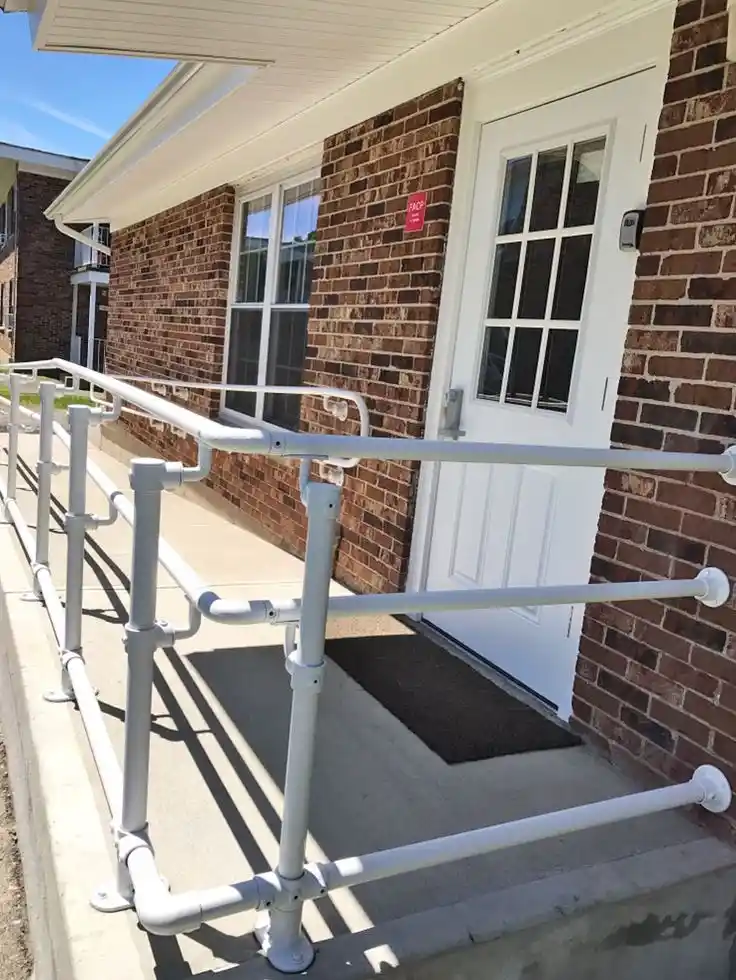
This guide helps you understand what makes a concrete ramp accessible before planning concrete work.
It covers:
For ADA concrete service details, visit our ADA concrete work page.
For general concrete service options, visit our concrete work page.
For more planning help, visit the Odell Concrete resource center.
A concrete ramp may need accessibility review when it is part of an accessible route for a commercial property, public-facing space, multi-family property, HOA common area, parking route, tenant space, or regulated path of travel.
A ramp should be reviewed for:
Federal ADA guidance generally uses a maximum running slope of 1:12 for ramp runs, a maximum cross slope of 1:48, and a minimum clear width of 36 inches for ramp runs. California and local requirements may be stricter depending on the property type and project scope, so the correct requirement should be verified before construction. (Access Board)
Accessibility requirements can depend on the property, jurisdiction, building use, route, occupancy, and project scope.
This guide can help you ask better questions before work begins. It should not replace review by the correct city, county, architect, engineer, CASp, inspector, or authority having jurisdiction.
If the ramp is part of a commercial property, multi-family property, public route, parking route, tenant improvement, or ADA correction, confirm the requirements before concrete is poured.
For permit planning, read our concrete permits in Orange County guide.
An ADA concrete ramp is a concrete walking surface designed to provide accessible travel between two different elevations.
A ramp may connect:
Concrete ramps are often used because they can be durable, permanent, and integrated into nearby concrete.
But a ramp only works well when slope, landings, handrails, drainage, surface texture, and transitions are planned correctly.
Good concrete ramp accessibility basics start with the full route, not just the ramp.
The ramp should connect safely to:
A ramp that has the right slope but poor landings, bad drainage, narrow clearance, missing handrails, or uneven transitions can still create access problems.
Before building or replacing a ramp, review:
For walkway service details, visit our concaaarete walkway contractor page.
Slope is one of the most important parts of a concrete ramp.
Running slope is the slope in the direction of travel. Cross slope is the side-to-side slope across the ramp surface.
For many ADA ramp conditions, ramp runs should not be steeper than 1:12, and cross slope should not be steeper than 1:48. A 1:12 running slope means 1 inch of rise for every 12 inches of run. (Access Board)
A ramp that is too steep can be difficult or unsafe for:
A ramp should be planned with the least practical slope for the site when space allows.
A simple way to understand a 1:12 ramp slope:
Vertical Rise | Approximate Ramp Run at 1:12 |
3 inches | 3 feet |
6 inches | 6 feet |
12 inches | 12 feet |
24 inches | 24 feet |
30 inches | 30 feet |
This does not include landing space.
The full ramp layout may need more room because landings are usually required at the top, bottom, and sometimes between ramp runs.
That is why ramp planning should happen before demolition, grading, or concrete placement.
Ramp landing requirements are just as important as slope.
Landings give people a level place to stop, turn, rest, open a door, or transition safely between surfaces.
ADA ramp guidance requires landings at the top and bottom of ramp runs. Landings are also required where ramp runs change direction. (Access Board)
Landings may be needed:
A ramp without proper landings may feel unsafe even if the slope looks correct.
Ramp width matters because users need enough clear space to travel safely.
Federal ADA guidance generally requires a minimum 36-inch clear width for ramp runs, measured between handrails where handrails are provided. California accessibility requirements may require different or wider clearances in some public-building, commercial, or public-housing settings, so the project should be verified before construction. (Access Board)
Clear width can be affected by:
Do not measure only the concrete edge to edge.
The usable clear path matters.
Handrail requirements depend on the ramp rise, ramp length, project type, and code requirements.
ADA standards require handrails on both sides of ramp runs in many cases, with exceptions for certain short rises. Handrail height is generally 34 to 38 inches above the ramp surface, and ramp handrails generally need horizontal extensions beyond the top and bottom of ramp runs. (ADA.gov)
Handrails may need review for:
Handrails should not be treated as an afterthought. They can affect ramp width, landing space, layout, and cost.
Ramp edges may need protection to help prevent wheels, canes, walkers, or mobility devices from slipping off the sides.
Edge protection may involve:
The right edge detail depends on the ramp location, elevation change, adjacent surfaces, and applicable code requirements.
Edge protection should be planned before the pour so the ramp, forms, handrails, and adjacent surfaces work together.
Good surface guidance starts with one simple rule: the ramp surface should be stable, firm, and slip-resistant.
ADA standards require accessible floor and ground surfaces to be stable, firm, and slip-resistant. Ramp surfaces also need to avoid abrupt level changes outside the allowed running slope and cross slope. (ADA.gov)
For concrete ramps, surface planning may include:
A ramp surface should provide traction without making travel uncomfortable.
For finish options, visit our decorative concrete finishes page.
Drainage matters for every ramp.
Water on a ramp can create slipping concerns, staining, surface wear, and long-term concrete problems.
ADA guidance notes that ramp runs and landings exposed to wet conditions should be designed to prevent water accumulation. (Mid-Atlantic ADA Center)
Ramp drainage should review:
If water already collects near the project area, read our why water pools on concrete guide.
For drainage service details, visit our concrete drainage systems page.
What makes a concrete ramp accessible is the full system.
An accessible ramp should be planned around:
A ramp can fail in real use if one major detail is missed.
For example:
The best ramp design starts with the full path of travel.
A concrete ramp and a curb ramp are related, but they are not always the same project.
A concrete ramp may connect two levels on private property or within a building access route.
A curb ramp usually connects a sidewalk or walkway to a street, driveway crossing, parking lot, or curb transition.
Curb ramps may involve:
ADA curb ramp guidance includes specific requirements for top landings, adjoining surfaces, counter slope, and transitions. (Access Board)
If your project touches a sidewalk, curb, gutter, driveway approach, or street connection, permit review may be needed.
Read our concrete permits in Orange County guide for planning help.
Accessible parking routes often need careful concrete ramp planning.
A ramp may connect:
Parking-area ramp planning should review:
A parking area can have the correct striping but still create access problems if the concrete route is uneven, steep, narrow, or poorly drained.
Ramps near doors need extra care.
Door areas may need room for:
A ramp should not send water toward the door.
A ramp landing should not force a wheelchair user to stop on a slope while opening the door.
For general concrete installation planning, read our how concrete installation works guide.
Walkways and ramps should work together.
A walkway may need accessibility review when it connects to:
Walkway issues that can affect ramp access include:
For walkway service details, visit our concrete walkway contractor page.
Commercial properties often need careful accessibility planning because customers, tenants, employees, vendors, and visitors may use the route.
Commercial ramp projects may involve:
Commercial concrete ramp work may also involve permit review, inspection, property management rules, ADA requirements, California Building Code requirements, and local city requirements.
For ADA service details, visit our ADA concrete work page.
HOAs and multi-family properties may need ramp planning for common areas and shared routes.
Common project areas may include:
HOA and multi-family projects may need review from:
Good planning helps avoid rework after concrete is placed.
Not every residential ramp is an ADA-regulated commercial ramp.
A private home ramp may be planned for access, safety, aging in place, mobility support, or easier movement between outdoor areas.
Residential ramp planning may still consider:
Even when ADA rules do not directly control the project, ADA concepts can still help guide safer planning.
Concrete ramp problems often happen when the ramp is treated as a small slope instead of a full accessible route.
Common problems include:
These problems are easier to prevent before concrete is poured.
An existing concrete ramp may need replacement or correction when it is unsafe, damaged, or does not fit the required route.
Replacement may be worth reviewing if the ramp has:
If old concrete must be removed, visit our demolition page.
Grading shapes the site before concrete is poured.
For ramps, grading can affect:
If the site has poor grade, the ramp may become too steep or may hold water.
For grading service details, visit our grading page.
Drainage should be reviewed before the ramp is installed.
A ramp may need drainage planning when:
Water problems can affect both accessibility and concrete performance.
For drainage service details, visit our concrete drainage systems page.
ADA concrete ramp work may need permit review, especially when the project affects a commercial property, public access route, sidewalk, curb ramp, parking area, driveway approach, foundation-adjacent area, or accessible route.
Permit review may involve:
Ask before work starts.
Once concrete is poured, correcting an accessibility issue can be more expensive.
For planning help, read our concrete permits in Orange County guide.
A ramp project usually follows a planned process.
Common steps may include:
For a full concrete process overview, read our how concrete installation works guide.
A concrete ramp finish should be chosen for traction, comfort, drainage, maintenance, and appearance.
Common finish options may include:
A ramp should not be too slick.
It should also not be so rough that it creates discomfort or rolling difficulty for mobility devices.
To compare finish options, read:
For finish service details, visit our decorative concrete finishes page.
ADA concrete ramp cost depends on the full scope, not only the size of the ramp.
Cost factors may include:
A short ramp with difficult access, drainage correction, and handrails may cost more than a simple flatwork section.
You do not need to know every requirement before calling.
Still, these details can help:
Photos from several angles are especially helpful.
You may need an estimate if you are planning:
Call Odell Concrete at (714) 717-1771 to request a free estimate.
Use these related guides if you are still planning your project:
For all guides, visit the Odell Concrete resource center.
Need help planning an accessible concrete ramp in Orange County?
Call Odell Concrete at (714) 717-1771 to request a free estimate.
You can also visit the contact page and share your photos, route details, drainage concerns, access notes, permit notes, and any correction notice or accessibility report.
ADA concrete ramp requirements may include slope, width, landings, handrails, edge protection, stable surface, slip-resistant texture, drainage, and safe transitions. The exact requirements depend on the project, property type, route, and local review.
ADA ramp runs generally should not be steeper than 1:12. That means 1 inch of rise for every 12 inches of run. Cross slope is generally limited to 1:48. Always verify requirements for your specific project before construction. (Access Board)
Federal ADA guidance generally requires at least 36 inches of clear width for ramp runs, measured between handrails where provided. California or local requirements may require more in some settings, so width should be verified before work begins. (Access Board)
Yes. Ramps generally need landings at the top and bottom of ramp runs. Landings may also be needed where ramps change direction or connect to doors, walkways, parking areas, or accessible routes. (Access Board)
Handrails are commonly required on ramp runs above certain rise or length thresholds. ADA standards generally require ramp handrails on both sides, with exceptions for some short ramp runs. Handrail height is generally 34 to 38 inches. (ADA.gov)
What makes a concrete ramp accessible is the full route. The ramp needs proper slope, clear width, landings, handrails where required, edge protection, a stable surface, slip-resistant texture, drainage, and smooth connections to nearby walkways, parking, and doors.
Yes. A ramp that is too steep can be difficult or unsafe for wheelchair users, walkers, canes, carts, and people with limited balance. Slope should be reviewed before concrete is poured.
Landings are generally expected to be level within accessibility limits. A landing that slopes too much can create a safety issue because users may need to stop, turn, or open a door on that surface.
A ramp surface should be stable, firm, and slip-resistant. A broom finish or other appropriate texture may help with traction, but the finish should also be comfortable for mobility devices.
Yes. Water pooling on a ramp or landing can create slipping concerns and usability problems. Drainage should be reviewed before the ramp is installed.
Not always. A concrete ramp may connect two levels on private property or within a route. A curb ramp usually connects a sidewalk or walkway to a street, driveway crossing, parking lot, or curb transition and may involve public right-of-way review.
Some ADA ramp projects may need permit review, especially when the work affects commercial access, public access, parking routes, sidewalks, curb ramps, drainage, grading, or required accessible routes.
Send photos of the ramp area, the full path of travel, the height difference, nearby doors, parking, walkways, drainage concerns, current concrete condition, access notes, and any permit, inspection, CASp, or correction documents.
Call Odell Concrete at (714) 717-1771 or visit the contact page to request a free estimate.
A good ramp should be planned before concrete is poured.
If you need help with ADA concrete ramp requirements, concrete accessibility planning, walkway connections, grading, drainage, demolition, or ADA concrete work in Orange County, call Odell Concrete at (714) 717-1771 to request a free estimate.
Odell Concrete Construction, serving Southern California since 1976 with trusted, durable, and professional concrete solutions.
Copyright © 2026 Darren B Odell. All rights reserved